
 language
 English
 Español
 بالعربية
News
Pragmatism, Integrity, Passion

Pragmatism, Integrity, Passion
Sourcing the wrong piping specifications can halt your construction project immediately and inflate your budget significantly. I will explain exactly how to navigate standard sizes to ensure perfect compatibility every time. Standard sizes rely on the Outside Diameter (OD), Inside Diameter (ID), and Wall Thickness to define the tube. Understanding specific stainless steel tube diameters and adhering to ASTM or ISO standards ensures system integrity, safety in high-pressure environments, and seamless integration for your industrial applications.
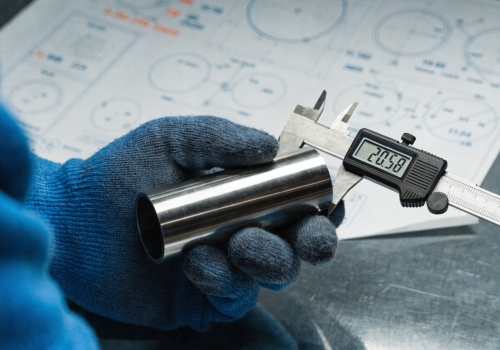
Many engineers and purchasing managers confuse pipe schedules with tube dimensions, which leads to critical ordering errors and installation delays. Let me break down the specific measurements you must specify to your supplier to avoid these costly mistakes.
Precision matters in construction because a loose fit results in leaks and system failures. You need to understand how each dimension affects the structural integrity of your project. The Outside Diameter (OD) ensures the tube fits into connectors, while the Wall Thickness dictates the pressure rating. Together, they define the stainless steel tube diameters and the structural strength required for heavy-duty EPC applications and machinery.
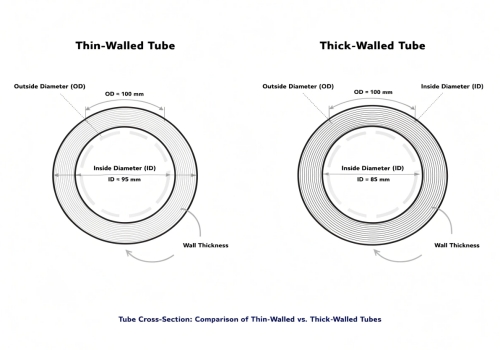
In my years at Centerway Steel, I have seen many orders delayed because the buyer focused only on the hole size rather than the outer fit. The Outside Diameter (OD) is your most critical number. It determines how the tube sits in a clamp or fits into a valve. If this number is off by even a fraction of a millimeter, the tube is useless for precision work. The Wall Thickness is equally important because it fights against pressure. A thicker wall makes the tube heavier and more expensive, but it can handle much higher stress. You must balance the cost against the safety needs of your project. The Inside Diameter (ID) is the result of the OD minus two times the wall thickness. You usually do not order by ID unless you are worried strictly about flow rates for fluids. Here is a breakdown of common size categories we produce:
| Category | OD (mm) | OD (inches) | Typical Wall Thickness (mm) | Common Uses |
|---|---|---|---|---|
| Small | 6 - 12 | 0.25 - 0.5 | 0.5 - 2.0 | Instrumentation, Medical, Hydraulic lines |
| Medium | 25 - 50 | 1.0 - 2.0 | 1.5 - 5.0 | Handrails, Structural columns, Fluid transport |
| Large | 76 - 150 | 3.0 - 6.0 | 3.0 - 10.0 | Industrial piping, Heavy structural supports |
Global projects often have confusing specifications that mix different regional requirements. Mixing these standards can cause material failure and compliance issues that ruin your project timeline. ASTM standards like A213 and A269 govern material properties and dimensions in the US, while ISO 1127 sets global metric standards. Choosing the right standard guarantees that your stainless steel tube diameters meet the necessary tolerance and corrosion resistance levels.
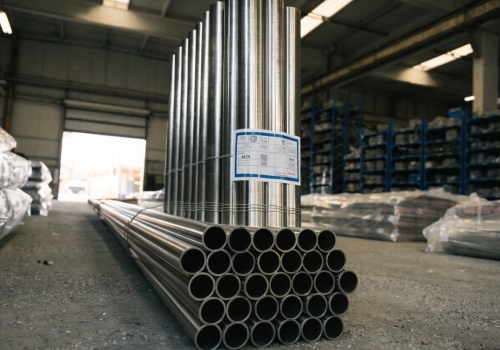
I work with clients from over 100 countries, and the confusion between standards is a common challenge. If you are in Europe, you likely lean toward ISO standards. These provide strict metric measurements. However, many oil and gas projects, even those outside the US, prefer ASTM standards. ASTM A213 is what you need if you are building boilers or heat exchangers. It focuses heavily on how the steel handles heat. On the other hand, ASTM A269 is for general service. It ensures the tube resists corrosion and fits standard tolerances. ISO 1127 is fantastic because it bridges the gap and offers a unified metric system that simplifies international trade. We also see demands for EN standards in Europe. The key is consistency. You cannot buy a tube made to ASTM specs and expect it to mate perfectly with a DIN flange without checking the tolerances first.
| Standard | Focus Area | Key Application |
|---|---|---|
| ASTM A213 | Heat & Pressure | Boilers, Superheaters |
| ASTM A269 | General Corrosion | Food processing, General piping |
| ISO 1127 | Dimensional Tolerance | Global industrial projects |
| ASTM A270 | Sanitary Quality | Dairy, Pharma, Biotech |
Ordering a "3-inch pipe" when you actually need a "3-inch tube" is a disaster that happens too often. You need to know the specific difference to protect your budget. Nominal Pipe Size (NPS) refers to a rough bore size and uses "Schedule" for wall thickness, whereas tubing is measured by exact Outside Diameter and actual wall thickness. Confusing these leads to incompatible fittings and installation failures.
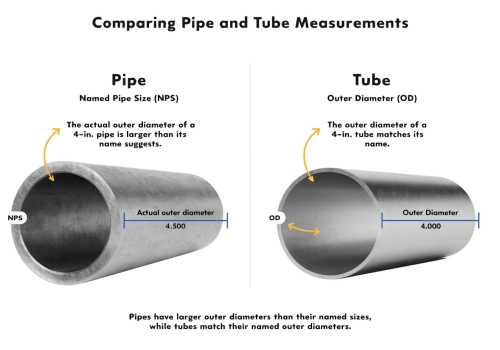
This is the area where I see the most money wasted. In the pipe world, a "2-inch pipe" does not actually measure 2 inches on the outside. It measures 2.375 inches. The "2 inch" label is just a name, a nominal designator. The wall thickness varies based on the "Schedule" (like Sch 40 or Sch 80). As the schedule gets higher, the wall gets thicker, and the inside hole gets smaller, but the outside stays the same. Tubing is different. A "2-inch tube" measures exactly 2 inches on the outside. The wall thickness is measured in real inches or millimeters, not a schedule number. If your design team uses CAD to draw a tube structure, they usually draw exact sizes. If you then order NPS pipe, the parts will not fit. For an EPC company, this distinction is vital. Pipes are generally used for transporting fluids and gases, like in the projects we supply for Shell or CNPC. Tubes are used for structural purposes, heat exchangers, or precision lines where the exact OD matters for the connection. Here is a quick reference to show the difference:
| Nominal Size | Actual Pipe OD (inches) | Actual Tube OD (inches) | Why it Matters? |
|---|---|---|---|
| 1/2" | 0.840 | 0.500 | Fittings will not interlock. |
| 1" | 1.315 | 1.000 | Pipe is 30% larger than tube here. |
| 2" | 2.375 | 2.000 | Critical for structural support. |
| 4" | 4.500 | 4.000 | Massive weight difference. |
Over-specifying materials wastes your limited budget, while under-specifying risks safety and rapid corrosion. You must find the balance between cost and performance. You must evaluate the application's pressure requirements, environmental corrosion risks, and budget constraints. Selecting the correct grade (like 304 or 316L) and precise dimensions ensures longevity and reduces maintenance costs for your construction projects.
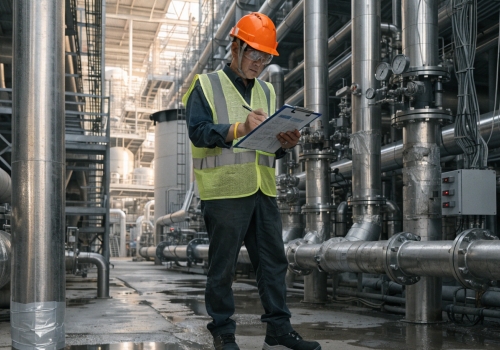
When I help clients like you maximize their budget, we look at the environment first. If your project is near the ocean or in a chemical plant, you cannot save money on the grade. You need 316L stainless steel because it resists salt and acid. If you use 304 to save a few dollars, the tube will rust in a year, and you will pay triple to replace it. Next, look at the wall thickness. Do you really need a 5mm wall? I once worked with a purchasing manager who specified extra-heavy walls for a handrail project. We advised him that a thinner wall was structurally sufficient and lighter. This reduced his material cost by 20% and made shipping cheaper. You also need to consider the finish. Do you need a mirror polish for looks, or is a mill finish okay because it is hidden inside a wall? Polishing costs money. Finally, find a one-stop supplier. At Centerway Steel, we integrate production, inventory, and sales. This means you do not have to buy pipes from one guy and fittings from another. We ensure the stainless steel tube diameters match the fittings before they ever leave our factory. This integration is how we support huge EPC companies and keep their projects moving smoothly.
Understanding standardized sizes, from OD to wall thickness, ensures your project is safe and cost-effective. By choosing the right standards and a reliable partner like Centerway Steel, you guarantee success.