
 language
 English
 Español
 بالعربية
News
Pragmatism, Integrity, Passion

Pragmatism, Integrity, Passion
Are you struggling to choose between welded and seamless pipes for your current project? Making the wrong decision can ruin your budget and cause serious delays in your construction timeline. A stainless steel welded tube is created by rolling steel strips and welding the seam, offering excellent cost savings and precise wall thickness. While seamless pipes handle higher pressure, welded tubes are often the smarter choice for structural applications, offering faster delivery and tighter tolerances for your specific needs.
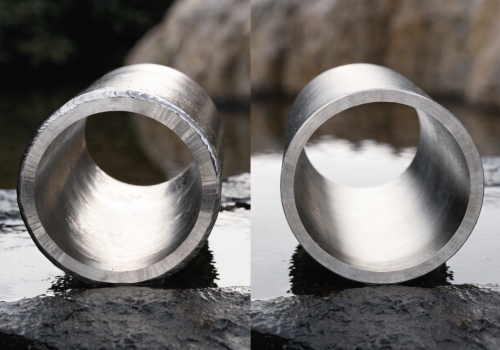
I have seen many purchasing managers hesitate at this stage. It is a common problem. You want quality, but you also need to save money. I will break this down for you simply.
Do you know exactly how the manufacturing process changes the final quality of the steel pipe? If you do not understand the method, you cannot predict the performance of the material. The main difference lies in the starting material. A stainless steel welded tube starts as a long, flat strip of steel. We roll this strip into a tube shape and weld it down the length. This process is fast and efficient. Because we start with a flat strip, the wall thickness is very even. At Centerway Steel, we can refine the weld seam so it is almost invisible. On the other hand, seamless tubing starts as a solid round bar, called a billet. We heat this bar and push a hole through the center. Then, we roll it to the right size. This process is harsh on the steel. It takes more steps and more time. I have made a simple table to show you the key differences in how we make them:
| Feature | Welded Tubing Process | Seamless Tubing Process |
|---|---|---|
| Raw Material | Flat steel strip (Coil) | Solid round steel bar (Billet) |
| Forming Method | Cold rolling and welding | Extrusion and piercing |
| Complexity | Low complexity, fewer steps | High complexity, many steps |
| Production Speed | Fast production | Slower production |
| Wall Uniformity | Very consistent | Can vary slightly |
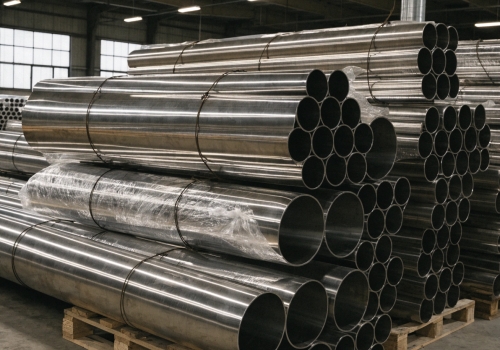
Is the high cost and long lead time of seamless tubing really worth it for your specific application? You are likely under pressure to cut costs without losing quality, and time is always money. Cost is usually the biggest factor for my clients. Because a stainless steel welded tube requires less processing time and simpler equipment, it is cheaper to produce. I often tell my customers that if the application does not demand high-pressure resistance, there is no need to pay extra for seamless. The price difference can be significant, sometimes up to 30% or more depending on the market. Time is the second factor. I remember a client from a large EPC company who needed pipes urgently for a port construction project. The lead time for seamless pipes was too long because the manufacturing process is slow. We offered them welded tubing instead. Because we can produce welded tubes much faster, they received their materials on time. This saved their project schedule. If you need large diameter pipes with thin walls, welded is almost always the only option. Making a large, thin seamless pipe is very difficult and expensive. So, if you have a tight deadline or a strict budget, welded tubing is usually the better friend to your bottom line.
Are you worried that a welded seam makes the tube weak or prone to leaks under pressure? This is the most common fear I hear from engineers and buyers, but technology has changed. It is true that the seam is a "stress point." Generally, a welded tube has about 80% of the pressure rating of a seamless tube of the same size. If you are building a high-pressure reactor or a critical gas line, seamless is the safer choice. However, for most construction, water transport, and low-pressure oil lines, the stainless steel welded tube is more than strong enough. There is also a hidden benefit to welded tubing: concentricity. This means how perfectly round the hole is and how even the wall thickness is. Because welded tubes start as high-quality flat sheets, the wall thickness is extremely consistent. Seamless tubes can sometimes have one side thicker than the other because the hole might not be perfectly in the center. Here is why this matters to you:
1. Fitting: Consistent walls make it easier to connect pipes.
2. Flow: Smooth inside surfaces in welded tubes (after treatment) allow fluids to move easily.
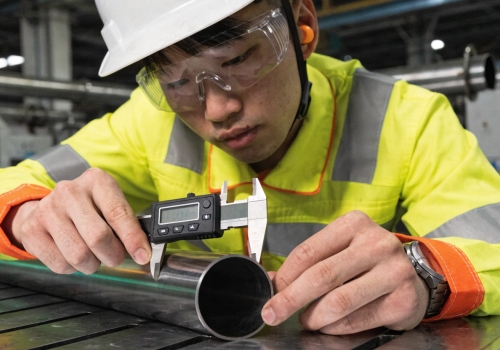
3. Aesthetics: For architectural use, welded tubes look better and are more uniform. At Centerway Steel, we test our welded pipes rigorously. We use X-rays and pressure tests to ensure the seam is solid. Unless you have a critical high-pressure application, the performance gap is much smaller than you think.
Welded tubing offers better cost, speed, and precision, while seamless is best for high pressure.