
 language
 English
 Español
 بالعربية
News
Pragmatism, Integrity, Passion

Pragmatism, Integrity, Passion
You worry about buying the wrong pipes. It causes delays and wastes your project budget. I understand this pressure because I help buyers like you every day. To choose the right tubing, you must measure three things: Outside Diameter (OD), Inside Diameter (ID), and Wall Thickness. The OD ensures the pipe fits your connectors. The ID controls the fluid flow. The Wall Thickness determines the pressure strength. Understanding these helps you avoid costly mistakes.
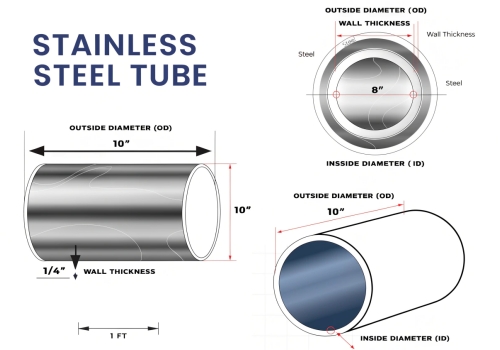
Getting these numbers wrong is a nightmare. It means the pipe will not fit the machine or it might burst under pressure. We need to look at each part closely so you can buy with confidence.
If the tube is too big, it will not fit the clamp. If it is too small, it will leak. You cannot afford leaks in a large construction project. The Outside Diameter (OD) is the width across the outer surface. It is the most important number for ordering because it decides if the tube connects correctly to your fittings. You must measure this with a caliper for exact results.
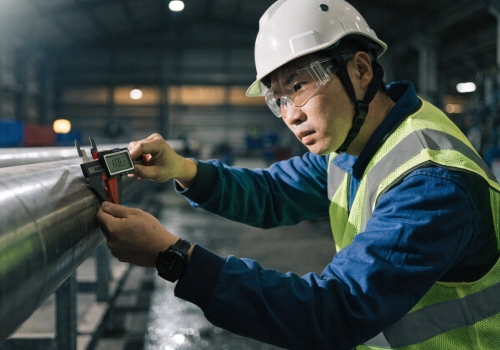
I have seen many orders come into Centerway Steel where the buyer was not sure about the OD. This is risky. In our industry, especially for EPC projects, the OD is the primary identifier. It dictates compatibility. If you are building a pipeline network in a refinery, your connectors are fixed sizes. The tube must match them perfectly. A difference of just one millimeter can prevent a weld alignment. This stops the whole installation team. We usually check the OD with a micrometer or a caliper. At Centerway, we follow strict standards like ASTM and ISO. This ensures the precision is high. You might ask, "Can I customize this?" Yes. We can fabricate tubes to meet a very specific OD. This is helpful for unique machinery in the automotive or aerospace sectors. But for most construction jobs, standard sizes save you money and time. Remember that the OD works with the wall thickness to define the strength. A larger OD with a thin wall is weak. A smaller OD with a thick wall is strong. You must balance this. When we inspect our pipes before shipping to global partners like Chevron or Shell, the OD is the first check we perform. It is the "fingerprint" of the tube. If the OD is wrong, nothing else matters.
| Feature | Importance | Measurement Tool | Common Tolerance |
|---|---|---|---|
| Fitment | Critical for connectors | Caliper / Micrometer | +/- 0.1 mm |
| Pressure | High impact | Pressure Gauge | Variable |
| Aesthetics | Visible surface | Visual Inspection | N/A |
A pipe that is too thin will burst. This causes safety hazards and stops production. You need to know exactly how much pressure your system will handle. Wall thickness is the distance between the outer and inner skin of the tube. It controls the mechanical strength. A thick walled tube of stainless steel handles high pressure and resists corrosion much better than thin tubing.
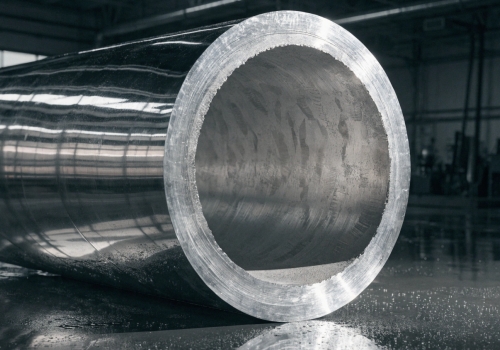
Wall thickness is my favorite topic because it separates the good suppliers from the bad ones. When you ask for a thick walled tube of stainless steel, you are usually dealing with high-pressure fluids or gases. In the oil and gas industry, which we serve often, this is non-negotiable. The wall thickness is measured with a specialized gauge. If you get this wrong, the pipe might fail. A failure in a chemical plant is catastrophic. You must consider the weight. Thicker walls mean more steel. More steel means the pipe is heavier. This impacts your shipping costs and the support structures at the construction site. If you are designing a platform, you need to account for this extra weight. I often remind my clients about "corrosion allowance." In coastal construction, rust eats the steel over time. A thick walled tube of stainless steel provides extra material. This means the pipe lasts longer even if the surface corrodes. Also, think about bending. If you need to bend the pipe, a thicker wall is harder to bend but it keeps its round shape better. Thin walls might collapse or wrinkle. If your project requires a thick walled tube of stainless steel, you need heavy-duty bending equipment. Here is a breakdown of why you might choose different thicknesses:
· Heavy Wall: Essential for high-pressure steam lines, hydraulic systems, and structural supports in skyscrapers. It provides rigidity. We always check the working pressure and the environment before we suggest a thickness. We look at the "Schedule" numbers, like Sch 40 or Sch 80. These correspond to specific wall thicknesses. We ensure these match your engineering diagrams exactly.
If the fluid moves too slowly, your efficiency drops. If it moves too fast, it damages the system. The space inside the pipe controls this speed. The Inside Diameter (ID) is the width of the open space inside the tube. It is critical for flow calculations. It is usually a theoretical number derived from the OD and the wall thickness. The ID is tricky. In the steel pipe world, we usually order by OD and Wall Thickness.
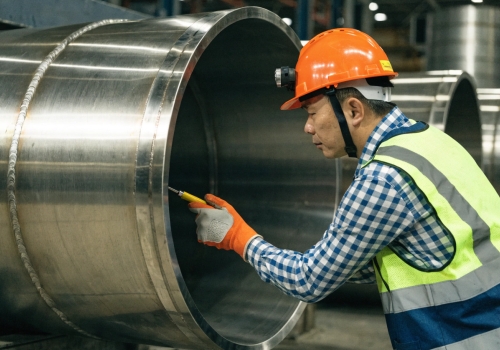
The ID is what is left over. The formula is simple: ID = OD - (2 x Wall Thickness). However, because there are tolerances in manufacturing, the ID can vary slightly. For general construction, this variation is fine. But for my clients in precision engineering or fluid transport, the ID is vital. It dictates the flow rate. If the ID is smaller than you thought, you get a pressure drop. This forces your pumps to work harder. It wastes energy. If you are inserting a probe or another part inside the tube, the ID must be exact. We use bore gauges to measure this. Sometimes, clients need a "honed" ID. This means we polish the inside to make it extremely smooth and accurate. This is common for hydraulic cylinders where a piston must slide perfectly. Here is how different factors affect your choice:
1. Flow Rate: Larger ID allows more volume but lowers pressure. It is essential for large transport lines.
2. Fitting Compatibility: Some fittings insert into the pipe rather than over it. The ID must match the fitting stem perfectly.
3. Cleanliness: A smoother ID surface is typical in sanitary tubing. It prevents bacteria growth. This is crucial for food processing or medical clients. At Centerway Steel, we try to keep the ID as close to the theoretical number as possible. But you should always tell us if the ID is your "critical dimension." If we know that, we can adjust our production. We can prioritize the inside size over the outside size. This ensures your system performs exactly as you designed it.
To select the best tubing, you must balance the Outside Diameter for fit, the Wall Thickness for strength, and the Inside Diameter for flow. Whether you need a standard pipe or a thick walled tube of stainless steel, precise measurements save costs. We at Centerway Steel are ready to help you find the right solution.