
 language
 English
 Español
 بالعربية
News
Pragmatism, Integrity, Passion

Pragmatism, Integrity, Passion
Do you struggle with cracked or wrinkled tubes during fabrication? Bad bends waste money and delay projects. You need the exact technique to get perfect curves every time. To know how to bend stainless steel tube, you must match your wall thickness and bend radius to the right tools. Use a mandrel for thin walls, account for high springback, and apply about 50% more power than you use for carbon steel.
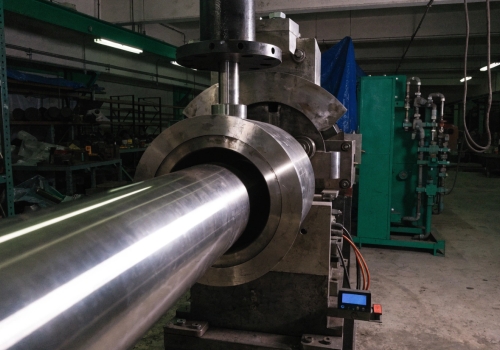
I remember ruining a whole batch of tubes on my first big project because I ignored these basic details. Read on so you do not make the same costly mistakes.
Using the wrong bending force causes broken tools and rejected parts. Different steel grades act in very different ways when you apply stress to them. You must adjust your bending machine based on the steel type. Austenitic grades have great ductility but harden fast. Ferritic grades act like regular carbon steel. Duplex grades need double the power of austenitic grades due to their high strength. I often see buyers purchase a random batch of steel and expect their shop to bend it easily. This does not work. You need to look at the exact grade first. Austenitic stainless steel, like 304 or 316, is the most common choice. It stretches well. But it work-hardens very quickly. When you apply force, the metal gets stronger. It fights back with high yield strength. You have to push it past this yield point. This means your machine needs a lot more power. You also face more springback. The tube will unbend slightly after you form it. You must overbend the tube to get the correct final angle. Ferritic stainless steel is cheaper but less ductile. It behaves much like simple carbon steel. Duplex stainless steel is extremely strong. We use it for tough environments like heavy construction and pipelines. Because it is so strong, you need massive force to bend it safely.
| Steel Type | Work-Hardening | Bending Power Needed | Common Grades |
|---|---|---|---|
| Austenitic | High | 150% of carbon steel | 304, 316 |
| Ferritic | Low | Similar to carbon steel | 409, 430 |
| Duplex | High | 200% of austenitic | 2205 |
Do your bends look flat or wrinkled? Thin walls and tight corners cause nasty distortions if you just force the metal without inner support. The secret to how to bend stainless steel tube lies in the wall factor and the degree of bend. If your tube has thin walls or needs a tight radius, you must put a mandrel inside the tube to support it.
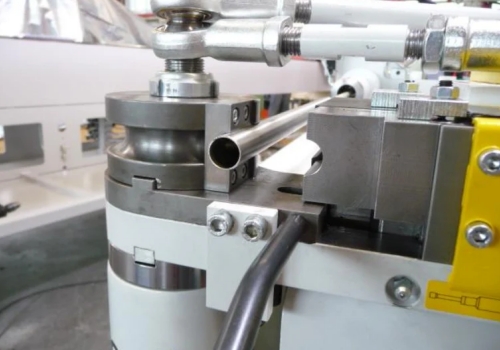
Let me share a quick story. Last year, a contractor called me. His square tubes kept crushing at the corners. He did not use a mandrel. When you bend any metal tube, the outside wall stretches and gets thinner. The inside wall compresses and gets thicker. If the tube is hollow and the wall is thin, it simply collapses. To stop this, we look at the wall factor. You divide the outside diameter by the wall thickness. A number over 30 means you have a thin-wall tube. You also look at the degree of bend. You divide the bend radius by the outside diameter. A tight bend needs much more inner support. You must use a proper setup. This setup includes a bend die to form the shape. It needs a clamp die to hold the tube. It needs a pressure die to push the tube. For thin walls, you slide a mandrel inside the tube. This keeps the tube perfectly round. If wrinkles still form on the inside edge, you must add a wiper die. If you bend a rectangular tube, hard-way bending causes less distortion than easy-way bending.
| Tool Name | Main Function | When to Use |
|---|---|---|
| Bend Die | Sets the final radius | Every bend |
| Mandrel | Supports the inside | Thin walls, tight bends |
| Wiper Die | Stops inside wrinkles | Very tight bends |
Cold bending saves time, but sometimes the metal just snaps. You must know when to apply heat to prevent costly material failures. Cold bending is best to keep the original surface finish and save money. Hot bending is required when you need very small radii. You must control the heat carefully to avoid ruining the steel structure.
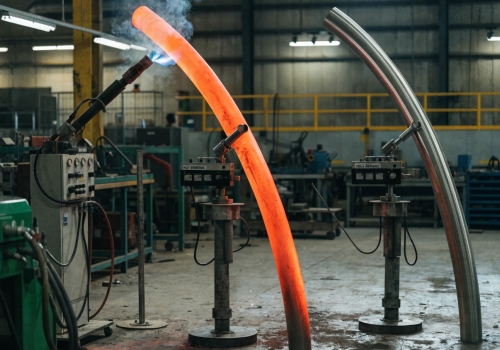
Many of my construction clients ask me if they should heat the pipes. I always suggest cold bending first. Cold bending does not need extra heating gear. It keeps the high-quality surface finish intact. It also stops thermal distortion. But cold bending takes much more energy. It also leaves more residual stress inside the metal. Sometimes, cold bending is impossible. If you need a very sharp turn, the metal will break. In this case, you must use hot bending. Hot bending makes the metal soft. But it is slow and costs more. It also ruins the nice surface finish. You must be very careful with heat. If you heat austenitic steel to the wrong temperature, carbides form. This makes the steel rust later. Ferritic steel has a different problem. In cold winter weather, ferritic steel becomes brittle. It can crack easily. This is called the ductile-to-brittle transition temperature. You must store these materials in a heated room before you work on them. If the metal cracks, you must lower your forming speed.
| Feature | Cold Bending | Hot Bending |
|---|---|---|
| Energy Needed | High | Low |
| Surface Finish | Excellent | Poor |
| Bend Radius | Moderate | Very Tight |
| Best For | Standard projects | Complex, sharp bends |
You finish the perfect bend, but a month later the pipe rusts. Skipped cleaning steps lead to fast corrosion and total project failure. Bending machines use heavy oils to reduce friction. You must wash off all lubricants, especially chlorinated oils, because they attack stainless steel. You must also remove any iron dust left by the tooling. I once visited a site where newly installed pipes showed brown rust spots within a week. The buyer blamed the steel quality. But the real issue was poor cleaning. During the bending process, machines apply thick lubricants. These oils reduce friction between the tube and the dies. Some of these oils contain chlorides. Stainless steel hates chlorides. If you leave these oils on the metal, they will eat through the protective layer. Also, your bending tools are often made of harder carbon steel. As the tube drags against the tools, tiny iron particles stick to the stainless steel surface. When the air gets humid, this iron dust rusts. It makes the whole pipe look bad and causes real damage over time. You must clean the tube completely. You must use the right solvents to strip away the oil. Then, you should passivate the surface. Passivation uses a mild acid to clean the metal perfectly. It helps the chromium in the steel react with oxygen in the air. This reaction builds an invisible shield. Good cleaning takes extra hours, but it saves years of maintenance costs.
| Step | Action | Purpose |
|---|---|---|
| 1 | Solvent Wash | Removes heavy bending oils |
| 2 | Acid Pickling | Removes embedded iron dust |
| 3 | Passivation | Restores anti-rust oxide layer |
Perfecting bends requires the exact force, proper tools, and deep grade knowledge. For your next project, contact Centerway Steel to source premium stainless steel tube that forms perfectly every time.