
 language
 English
 Español
 بالعربية
News
Pragmatism, Integrity, Passion

Pragmatism, Integrity, Passion
Corrosion and heat can destroy your piping projects quickly if you choose the wrong material. You need a steel grade that handles stress better than standard options without breaking your budget. The essential 439 stainless steel properties include excellent oxidation resistance up to 950°C and strong chloride corrosion resistance. It is a ferritic, titanium-stabilized alloy perfect for complex shapes like tubular manifolds and exhaust systems.
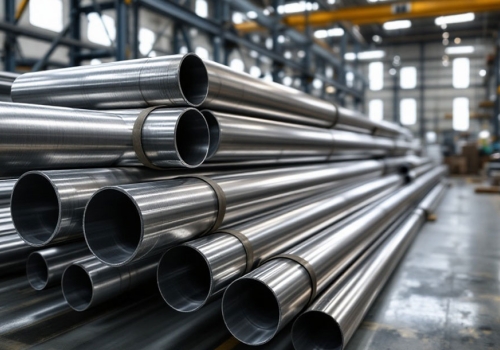
I have seen many clients struggle with choosing the right steel. They often get confused between Grade 409 and Grade 439. This mistake can lead to failure in the field. Let me guide you through the details of grade 439.
The wrong chemical mix leads to rust and cracks in your final product. You must understand the specific elements inside the metal to predict how it will perform. The high Chromium (17-19%) and Titanium content define 439 stainless steel properties. This specific combination stabilizes the steel against intergranular corrosion and improves weldability compared to other ferritic grades.
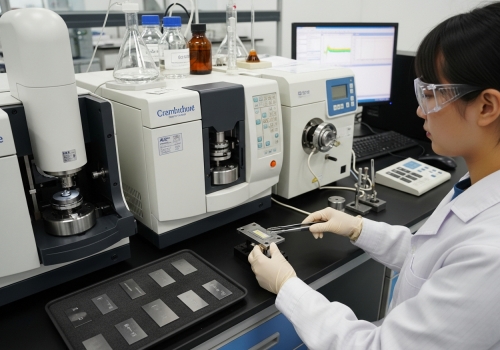
At Centerway Steel, we always look at the chemistry first. This is the DNA of the pipe. Grade 439 is special because of two main elements. First, it has a high level of Chromium. You can see in the table below that it has about 17.35%. This is much higher than Grade 409. This high Chromium gives it power against rust. It helps the steel survive in wet places. The second key element is Titanium. The data shows 0.335% Titanium. This might look small. But it plays a huge role. It stabilizes the structure. It stops the carbon from causing problems during welding. This makes the steel easier to weld than many other types. It also contains Nitrogen and Niobium. These elements work together. They make sure the steel is strong but can still be shaped. We see this chemical balance as the foundation of quality. Here is the breakdown of the composition based on our data.
| Element | Content (%) |
|---|---|
| Iron (Fe) | 81.35 |
| Chromium (Cr) | 17.35 |
| Silicon (Si) | 0.35 |
| Titanium (Ti) | 0.335 |
| Manganese (Mn) | 0.25 |
| Nickel (Ni) | 0.20 |
| Molybdenum (Mo) | 0.10 |
| Niobium (Nb) | 0.02 |
| Carbon (C) | 0.01 |
Hard materials often crack when you try to bend or shape them. You need a material that offers a perfect balance of strength and flexibility for your designs. Key mechanical 439 stainless steel properties include a tensile strength of 438 MPa and good ductility. This allows for deep drawing and forming into difficult shapes without breaking, unlike harder martensitic steels.
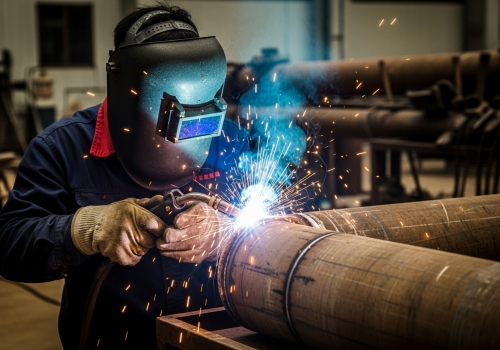
I know that reading numbers on a sheet is different from working in the factory. But these numbers tell us how the steel behaves. The tensile strength is 438 MPa. This is strong enough for most structural uses. The yield strength is 263 MPa. This means it can hold a lot of load before it starts to deform permanently. For me, the most interesting part is the ductility. The elongation is 2.80% in a cold-worked state. But in the annealed state, it is very formable. You can press it into complex shapes. It does not crack easily. This is vital for making parts like manifolds. We often see customers need to bend pipes tightly. Grade 439 handles this well. It has a Rockwell B hardness of 72.9. This is soft enough to cut and machine but hard enough to last. It is very similar to Grade 304 in how you form it. But it does not contain nickel, so the cost is often lower. This helps you save money on large projects.
| Property | Metric Value | Imperial Value |
|---|---|---|
| Tensile Strength (Annealed) | 438 MPa | 63500 psi |
| Yield Strength (Annealed) | 263 MPa | 38100 psi |
| Poisson’s ratio | 0.27 - 0.29 | 0.27 - 0.29 |
| Elongation (50% cold worked) | 2.80% | 2.80% |
| Hardness (Rockwell B) | 72.9 | 72.9 |
Using the wrong steel grade in hot environments wastes money and causes downtime. You need to know exactly where this specific grade outperforms the others. Due to its heat and corrosion resistance, Grade 439 is ideal for automotive exhaust systems, sugar industry equipment, and catering tubes. It handles wet environments and high temperatures better than Grade 409.
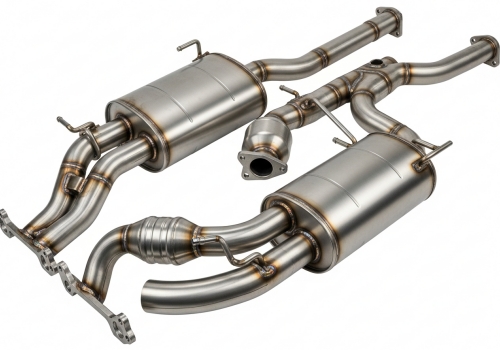
We supply steel to many industries. I have seen Grade 439 perform well in very specific places. The biggest use is in automotive exhaust systems. The engines get very hot. The temperature often goes beyond the limit of Grade 409 steel. Grade 439 can resist oxidation at these high heats. It stays strong and does not flake apart. Another big area is the sugar industry. The processing of sugar involves wet and corrosive conditions. The chlorides in the process eat away at normal steel. But the 439 stainless steel properties include resistance to this wet corrosion. It lasts longer. I also recommend it for catering equipment. It polishes well. It looks bright and clean. This is good for kitchens and food displays. It is also used in elevator panels because it looks nice. Centerway Steel has sent this material to partners in over 100 countries. We see it used in tubular manifolds and building construction. It is a true multi-purpose material for difficult environments.
| Application Area | Why Grade 439? |
|---|---|
| Automotive Exhausts | Resists high temperatures beyond Grade 409 limits. |
| Tubular Manifolds | Excellent formability for complex shapes. |
| Catering Equipment | Polishes to a high brightness; resists wet corrosion. |
| Sugar Industry | Resists chloride attack better than standard ferritic steels. |
Grade 439 offers superior heat and corrosion resistance with excellent formability, making it the smart choice for exhausts and industrial equipment where durability and cost-efficiency matter.