
 language
 English
 Español
 بالعربية
News
Pragmatism, Integrity, Passion

Pragmatism, Integrity, Passion
Are you struggling to choose the right pipe? A wrong choice causes leaks and ruins your project budget. I will help you pick the perfect pipe for your needs today. The main difference between seamless vs welded stainless steel pipe is the manufacturing process. Welded pipes have a seam from joining steel strips. This method offers better cost and larger diameters. Seamless pipes come from solid steel. They provide higher pressure resistance and no weak points for critical applications.
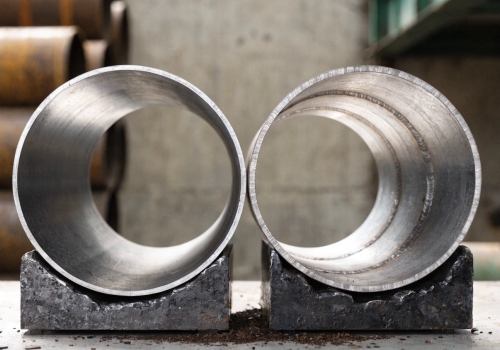
You can easily get confused by so many pipe options on the market. However, you must understand these differences to save money and ensure safety. We will look closely at each type below.
Are you worried about high material costs? Heavy expenses can hurt your project profits quickly. Welded pipes offer a great way to save money without losing basic quality. We make welded tubing by rolling flat strips of stainless steel into a tube shape. Then, we weld the edges together. This process is fast. It allows for very thin walls or very large diameters. It is a highly cost-effective solution for many standard engineering projects.
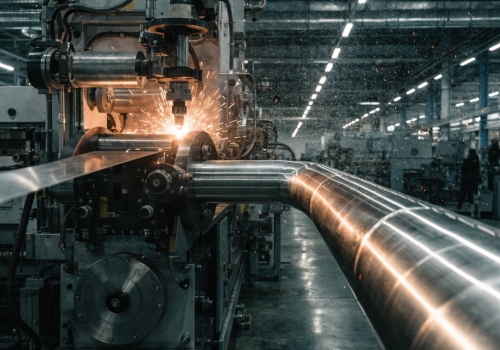
I have worked in the pipe industry for many years. I see many buyers ignore welded pipes. They think the seam is weak. That is not always true today. We use advanced cold rolling methods to refine the weld bead. Sometimes, you can barely see the seam.
First, we take a flat steel coil. Next, we roll it into a round shape. Then, we weld the full length. Finally, we can draw the pipe to make the surface smooth. The flat steel has a very uniform thickness. This fact gives the final pipe tight tolerances.
Welded pipes give you better lead times. They cost less money. Welded pipes are your best choice for large diameters with thin walls. You can also get them in very long lengths.
The weld seam creates a stress point. This point causes the pressure rating to drop to about 80 percent of seamless pipes. Also, we cannot easily make thick-walled welded pipes. The thick metal is too hard to roll.
| Feature | Advantage | Disadvantage |
|---|---|---|
| Cost | Low and budget-friendly | None |
| Lead Time | Fast delivery | None |
| Wall Thickness | Great for thin walls | Bad for heavy walls |
| Pressure Rating | Good for standard use | Lower due to stress point |
Do you face extreme high-pressure environments? A sudden pipe burst will cause disaster and shut down your plant. Seamless pipes give you the ultimate peace of mind. Seamless pipe starts as a solid steel block. We heat it and push a rod through the center to form a hollow tube. It has no weld seam. This fact offers superior pressure ratings, higher purity, and excellent corrosion resistance for your most critical applications.
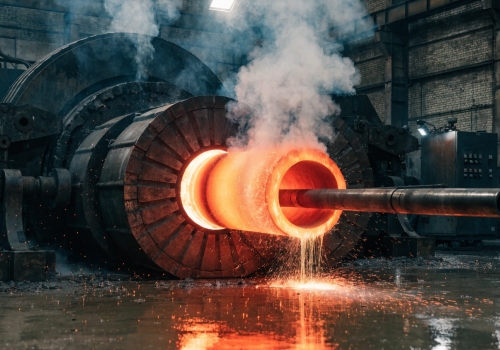
I always recommend seamless pipes for oil and gas exploration. As a supplier at Centerway Steel, I know how tough these environments are. A pipe without a seam is naturally stronger.
We do not use flat strips here. Instead, we start with a solid round billet. We drill a hole through the billet. Then, we heat the steel. We force it over a die and a long rod called a mandrel. This step creates the hollow shape. For smaller sizes, we use a drawing process. We pull the hollow tube through a narrow die. This action makes the pipe longer and thinner. We often repeat this step many times.
This pipe has no weak points. It handles much higher pressure than a welded pipe. The surface is cleaner. A clean surface prevents pitting and rust. You do not need extra weld testing either.
Making this pipe takes many steps. It costs more money. It takes more time to produce. It is also very hard to make thin walls with large diameters.
| Feature | Detail |
|---|---|
| Pressure Rating | Excellent capacity |
| Corrosion Resistance | Superior quality without impurities |
| Cost | Higher than welded options |
| Production Time | Longer manufacturing lead times |
Are you still confused about the final decision? Making the wrong choice hurts both safety and budget. Let us compare them directly so you can buy with total confidence. Choosing between seamless vs welded stainless steel pipe depends entirely on your project limits. You should use welded pipes for low-pressure, large-diameter, and cost-sensitive jobs. You must choose seamless pipes for high-pressure, heavy-wall, and critical chemical or oil applications. Both types have unique values. I often talk to EPC purchasing managers. They always want the best price. I tell them that the cheapest price is not always the best value. You must match the pipe to the specific job.
You should use welded pipes for basic water transport. They work perfectly for architectural structures and low-pressure exhausts. Welded pipe is usually your only practical choice for very large diameters. It saves a lot of money on big construction projects.
You must use seamless pipes for refineries and chemical plants. They are perfect for high-pressure steam lines. A pipe without a seam has zero chance of a weld failure. It provides long-lasting safety in harsh conditions.
Here is a simple table to help you decide.
| Project Need | Best Choice | Reason |
|---|---|---|
| Tight Budget | Welded | Less processing steps required |
| High Pressure | Seamless | No weak weld seam present |
| Large Diameter | Welded | Easier to roll flat steel |
| Heavy Wall | Seamless | Hard to roll thick metal |
| Fast Delivery | Welded | Quicker overall manufacturing process |
Understanding the differences between seamless and welded pipes helps you balance safety and cost. You must choose wisely based on your pressure needs to make your next project succeed.