
 language
 English
 Español
 بالعربية
News
Pragmatism, Integrity, Passion

Pragmatism, Integrity, Passion
Do you struggle to pick the right pipe material? The wrong choice causes costly pipe failures. I will help you solve this problem today. Inconel vs stainless steel comes down to the base metal. Inconel is a nickel-based superalloy built for extreme heat and harsh chemicals. Stainless steel is an iron-based alloy with chromium. It offers great general rust protection at a much lower cost.
Many buyers lose money because they do not understand these metals. I want to share my 18 years of EPC purchasing experience with you. Do not skip this guide if you want to save your project budget.
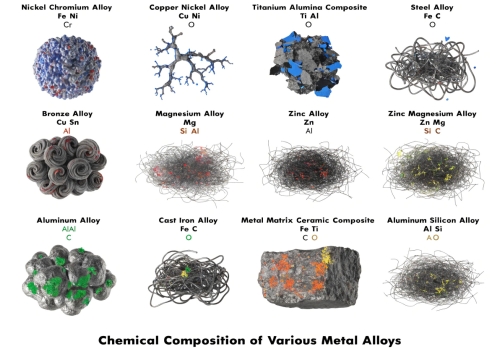
Are material specs giving you a headache? Bad chemical composition leads to weak structures. Let us look at what goes into these metals. The chemical makeup separates these two metals. Inconel contains more than 58% nickel. This makes it a superalloy. Stainless steel consists mostly of iron. It adds at least 10.5% chromium to form a protective layer against basic rust.
I work as a purchasing manager for a mid-sized EPC contracting company. I have 18 years of experience in the construction industry. I use CAD tools every day. I work closely with engineers and production teams. We often debate about Inconel vs stainless steel. We must understand the chemical differences to make good choices.
Inconel relies on nickel. Nickel gives the metal amazing stability. Stainless steel relies on iron. Iron is cheap and strong. We add chromium to iron to make it stainless. Sometimes we add molybdenum to both metals. This adds extra protection against pitting.
| Feature | Inconel (e.g., Grade 625) | Stainless Steel (e.g., 316L) |
|---|---|---|
| Base Metal | Nickel (Ni) | Iron (Fe) |
| Nickel Content | Over 58% | 0% to 35% |
| Chromium Content | 14% to 23% | Over 10.5% |
| Main Advantage | Survives severe chemical attacks | Great basic rust protection |
Do high temperatures threaten your pipelines? Heat makes weak metals melt and break. You must choose a material that can take the heat. Inconel wins in extreme heat. It keeps its strength up to 1200°C. Stainless steel is very strong at room temperature. But stainless steel loses much of its strength when the heat goes above 600°C.
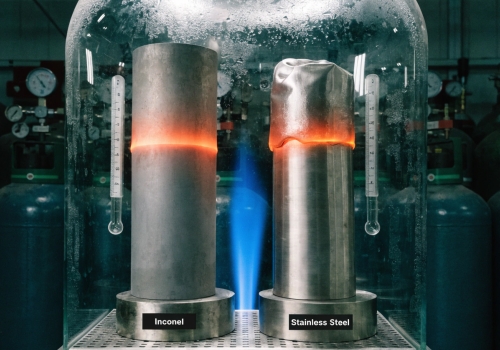
My production team often builds systems for end-users in the construction industry. Sometimes we build exhaust systems or pressure vessels. Heat is our biggest enemy. Inconel holds its shape in extreme heat. We call this creep resistance. Stainless steel works perfectly for normal building environments.
Engineers hate machining Inconel. It gets very hard when you cut it. We call this work-hardening. It ruins cutting tools fast. This makes production slow and expensive. Stainless steel is much easier to cut and weld. We use standard TIG or MIG welding for it.
| Property | Inconel | Stainless Steel |
|---|---|---|
| Heat Resistance | Up to 1200°C | Up to 600°C (most grades) |
| Machining | Very difficult and costly | Easy and fast |
| Welding | Needs special filler metals | Readily weldable |
| Tensile Strength | 900 to 1400 MPa | 485 to 1300 MPa |
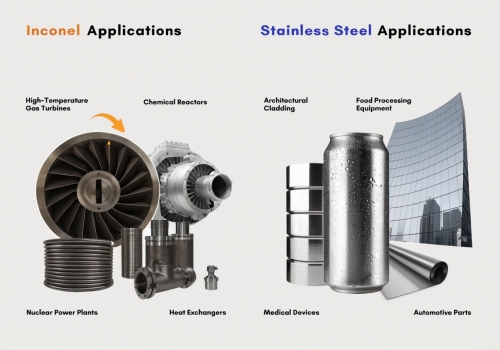
Are you overspending on raw materials? High costs eat your project profits. You need to match the exact material to the right job. The choice depends entirely on your project environment. Use Inconel for aerospace, nuclear plants, and marine engineering. Use stainless steel for construction, food processing, medical devices, and standard water pipelines. Stainless steel costs much less.
Cost is always a big factor for me. Inconel is very expensive. It has a lot of nickel. Nickel costs a lot of money. The difficult machining also adds to the final price. Stainless steel is affordable. It gives you the best value for standard industrial conditions.
I use critical thinking before I place an order. Does the pipe carry strong acids? Does it sit in a high-pressure steam zone? If yes, I must buy Inconel. If the pipe carries clean water, I choose stainless steel. If the pipe sits inside a normal building, I always choose stainless steel.
| Industry / Factor | Best Material Choice | Cost Level |
|---|---|---|
| Jet Engines & Nuclear | Inconel | Very High |
| Severe Chemical Plants | Inconel | Very High |
| Architecture & Construction | Stainless Steel | Low to Medium |
| Food & Beverage Tanks | Stainless Steel | Low to Medium |
Inconel vs stainless steel depends entirely on your heat and corrosion needs. For cost-effective standard projects, choose Centerway Steel for premium stainless steel pipe integration and reliable one-stop sourcing.