
 language
 English
 Español
 بالعربية
News
Pragmatism, Integrity, Passion

Pragmatism, Integrity, Passion
Choosing the wrong tube for high-pressure systems can lead to failure. This guide explains why A213 is the trusted standard for demanding applications, ensuring safety and reliability for your project. ASTM A213 stainless steel tubes are seamless ferritic or austenitic steel tubes made for high-temperature and high-pressure work. They are used in boilers and heat exchangers. Their special manufacturing process and materials ensure great strength, heat resistance, and long life under extreme conditions.
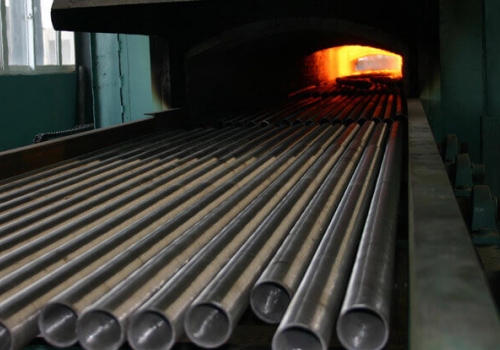
The "A213" name is more than just a label. It is a promise of performance. But what does this standard really cover? And how is it different from other standards you might see? Let's break it down to see why it is the top choice for critical projects. We have been supplying these tubes since 1996, and I want to share what we've learned.
Are you confused about A213 and A269 tubing? Picking the wrong one can risk your project's safety. We will explain the key differences so you can make the right choice. A213 tubes are for high-pressure, high-temperature service and have a minimum wall thickness. A269 tubes are for general corrosion resistance and have an average wall thickness. The main difference is their intended use, manufacturing focus, and how wall thickness is measured.
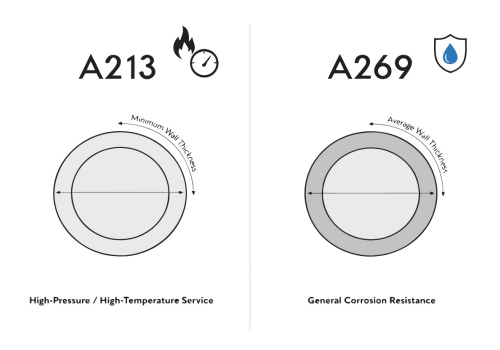
To help you decide, it is important to look closer at the details. Each standard is written for a specific purpose. If you use a tube designed for general service in a high-pressure boiler, you are inviting trouble. On the other hand, using a high-spec A213 tube where a general A269 tube would work might be too expensive. Understanding the difference is key to both safety and budget. Here's a simple breakdown of the main points:
| Feature | ASTM A213 | ASTM A269 |
|---|---|---|
| Primary Use | High-temperature, high-pressure (boilers, superheaters) | General service, corrosion resistance (instrumentation) |
| Manufacturing | Always seamless | Seamless or welded |
| Wall Thickness | Specified as Minimum Wall Thickness | Specified as Average Wall Thickness |
| Heat Treatment | Solution annealed and rapidly cooled | Often bright annealed for a polished finish |
| Pressure Rating | Designed and tested for high internal pressure | Designed for moderate pressure and fluid transport |
Not all stainless steel is the same. Using the wrong grade of A213 tube can lead to corrosion or failure. Let's look at the common grades to help you pick the best one. Key properties of ASTM A213 tubes are high-temperature strength, excellent corrosion resistance, and good flexibility for bending. Common grades like TP304L, TP316L, and TP321 are picked for their ability to resist different chemicals and heat, which makes them reliable in tough situations.
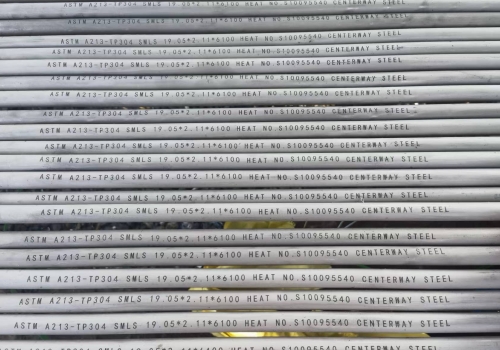
When you select a material, you are betting on its performance for years to come. The grade you choose defines that performance. The "TP" in the grade stands for "Tube/Pipe," and the number tells you the alloy composition. Let me explain the most common grades we handle every day.
TP304 is the most widely used austenitic stainless steel. It offers a great balance of corrosion resistance, formability, and strength. The "L" in TP304L means "Low Carbon." This version is better for welding because it reduces the risk of corrosion at the weld seam. It is a fantastic general-purpose choice for many high-temperature applications.
When you need better corrosion resistance, especially against chlorides and industrial chemicals, TP316 is the answer. It contains molybdenum, an element that significantly boosts its ability to fight pitting and crevice corrosion. Like TP304L, the TP316L version has low carbon for better welding performance. We often recommend this for coastal or chemical plant projects.
For very high operating temperatures (above 425°C), TP321 and TP347 are the best choices. They are "stabilized" grades. TP321 contains titanium, and TP347 contains niobium. These elements prevent a type of high-temperature corrosion, making them extremely reliable in superheaters and other intense heat environments.
Hidden defects in tubes can cause big failures. Relying on untested materials is a huge risk. I will show you the strict tests that make sure every A213 tube is perfect. ASTM A213 tubes must pass required tests to ensure quality. These include mechanical tests (tensile, flattening, hardness) and pressure tests (hydrostatic or non-destructive). These checks confirm the tube's strength, integrity, and ability to perform without leaks under pressure. At Centerway Steel, we see these tests not as a requirement, but as a promise to our customers. A certificate is one thing, but knowing a tube will hold up under pressure is what matters. Here are the tests that every single ASTM A213 stainless steel tube must pass before it leaves a reputable mill.
We need to know how the material behaves.
Every tube must be proven leak-proof.
· Hydrostatic Test: Each tube is filled with water and brought to a very high pressure. It must hold this pressure without any leaks. This simulates the real-world conditions it will face.
· Non-Destructive Electric Test (NDT): As an alternative to the hydrostatic test, we can use methods like an Eddy Current Test. This electronic test can find tiny surface defects, cracks, or flaws that the human eye cannot see. It ensures the entire length of the tube is sound. These tests are not optional. They are the foundation of the safety and reliability that the ASTM A213 standard represents.
Theory is one thing, but real-world performance is what matters. If you are doubting if A213 is right for your project, let me share a real case to prove its reliability. ASTM A213 tubes are critical in industries like power generation, petrochemicals, and oil refining. They are mainly used in boilers, superheaters, and heat exchangers where materials must handle extreme temperatures and pressures for safe, efficient operation. Just last year, we worked with a major contractor in Turkey. They were building a new thermal power plant and needed thousands of meters of ASTM A213 TP316L seamless tubes for the main heat exchanger system. The project was on a tight schedule, and their purchasing manager was worried. He needed a supplier who could not only provide certified materials but also manage the complex logistics and guarantee quality from start to finish. He came to us with his concerns. We immediately put a plan together.
1. Sourcing: We secured the full quantity from one of our most trusted mill partners, ensuring consistent quality across the entire batch.
2. Added Assurance: The client wanted extra peace of mind. We arranged for an independent, third-party inspection from SGS. Their inspectors verified every single specification right at the mill before the tubes were even packed.
3. One-Stop Service: We handled everything. This included production oversight, the third-party inspection, reinforced export packaging, and all logistics to get the material to the port in Turkey, on time. The project was a huge success. The client was impressed that they could make one phone call to us and have everything taken care of. That is what being a "one-stop supplier" means to us. It's not just about selling pipe; it's about solving problems and ensuring our clients' projects succeed.
Can ASTM A213 tubes be bent?
Yes, absolutely. The standard requires them to have good ductility. The final heat treatment process, called annealing, makes them soft enough to be bent and flared during installation without cracking. This is essential for fitting them into complex boiler and heat exchanger systems.
What is the difference between seamless and welded A213 tubes?
This is a common point of confusion. The ASTM A213 standard is specifically for seamless tubes only. Tubes made by welding fall under different standards, like ASTM A249 (for welded boiler tubes) or ASTM A269 (for general service welded tubes). For A213, it must be seamless.
What does the 'L' mean in grades like TP304L or TP316L?
The 'L' stands for "Low Carbon." Low carbon grades have a maximum carbon content of 0.035%. They are better for welded parts. When you weld regular stainless steel, carbon can cause corrosion near the weld. Low carbon grades prevent this, making the final structure more durable.
For high-temperature, high-pressure service, ASTM A213 tubes are the proven standard. Trust our expertise to supply the right grade for your project, ensuring safety and long-term performance.