
 language
 English
 Español
 بالعربية
News
Pragmatism, Integrity, Passion

Pragmatism, Integrity, Passion
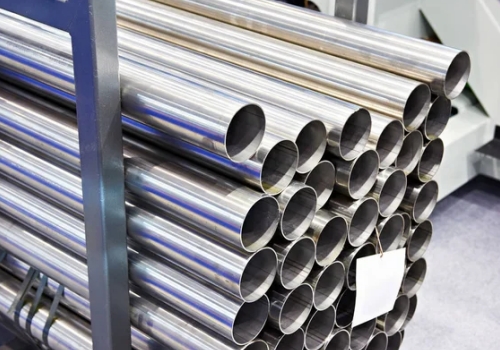
Are you struggling to calculate the exact weight of your pipe systems? Wrong numbers ruin project budgets. I will show you how to master stainless steel density today. The density of stainless steel material typically ranges from 7.5 to 8.0 g/cm³ (0.27 to 0.29 lb/in³). It changes based on the metal composition. For example, 304 stainless steel has a density of 7.93 g/cm³, while 316 stainless steel has a density of 7.98 g/cm³.
You might think a small difference in weight does not matter. It actually changes everything in large construction projects.
Do you feel confused by different density numbers from different suppliers? Inconsistent data causes design failures. I will break down the exact reasons behind these density variations. The density of stainless steel material depends mainly on its alloying elements, manufacturing process, and atomic microstructure. Metals with high amounts of heavy elements like nickel and molybdenum will always have a higher overall density than those without them.

Different chemical elements have different weights. Steel mills mix iron with other metals to create stainless steel. Chromium, nickel, and molybdenum are very common elements. The metal gains weight when the steel has more heavy metals like nickel or molybdenum. The final density goes up. 410 stainless steel has no nickel. It only has chromium. It has a lower density of about 7.80 g/cm³ because of this missing nickel. I see many buyers ignore this detail. They order the wrong grade. They pay too much for shipping. You must look at the chemical composition first. It dictates the physical weight.
The manufacturing method changes the metal density. Powder metallurgy creates a porous structure inside the metal. This porous nature makes the sintered steel less dense. The atoms inside the metal form different shapes. We call this the microstructure. Austenitic stainless steels have a face-centered cubic structure. We call it FCC. The atoms pack very tightly together in this shape. This tight packing increases the weight. Ferritic and martensitic steels have a body-centered cubic structure. We call it BCC. The atoms sit farther apart. This results in a lower density.
| Microstructure Type | Crystal Structure | Atom Packing | Average Density |
|---|---|---|---|
| Austenitic | Face-Centered Cubic (FCC) | Very Tight | High (up to 8.00 g/cm³) |
| Ferritic | Body-Centered Cubic (BCC) | Loose | Low (around 7.75 g/cm³) |
| Martensitic | Body-Centered Cubic (BCC) | Loose | Low (around 7.70 g/cm³) |
Do you waste time trying to convert units for international clients? Math errors lead to material shortages. I will give you the easiest way to calculate and convert density. You calculate density by dividing the mass of the metal by its volume. You can use a digital balance for mass and Archimedes' principle for volume. You can easily convert g/cm³ to kg/m³ by multiplying by 1000.

You must measure the mass first. I always use a highly accurate digital balance in the lab. The scale must have an accuracy of at least 0.01 grams. Next, you need the volume of the part. You just measure the sides and use basic math if the metal part has a simple shape. You use Archimedes' principle if the part has an odd shape. You can also use a liquid pycnometer or a gas pycnometer. These tools give you very high accuracy. Gamma-ray densitometry works well for very large pipes. You divide mass by volume after you get both numbers. The formula is very simple. It is ρ = m/v.
I work with buyers from many different countries. Some use the metric system. Some use the imperial system. You need to know how to switch between them quickly. The base unit is usually grams per cubic centimeter. We write it as g/cm³. You will see this unit on most material test reports. You must change it to pounds per cubic inch or kilograms per cubic meter for your software. Here is a quick conversion table for a standard density of 7.75 g/cm³:
| Target Unit | Math Action | Conversion Factor | Final Result |
|---|---|---|---|
| kg/m³ | Multiply | 1000 | 7750 kg/m³ |
| lb/in³ | Multiply | 0.036127 | 0.280 lb/in³ |
| lb/ft³ | Multiply | 62.43 | 484 lb/ft³ |
Are you unsure which metal grade to pick for your pipe network? Choosing the wrong grade ruins structural safety. I will compare the exact weights of different metals now. Austenitic grades like 304 and 316 are the heaviest, reaching up to 8.00 g/cm³. Ferritic grades are lighter. Compared to aluminum, which has a density of 2.70 g/cm³, stainless steel is almost three times heavier but offers much higher mechanical strength.
In my many years of working with pipeline projects, 304 and 316 are the most common grades. They belong to the 18-8 stainless steel family. 18-8 steel has a density of 7.93 g/cm³. 304 steel has 18% chromium and 8% nickel. It has the same density of 7.93 g/cm³. 316 steel has added molybdenum. This makes it slightly heavier at 7.98 g/cm³. That extra weight gives 316 much better resistance against salt and chemicals. We ship a lot of 316 pipes to marine and chemical processing clients. Other grades like 17-4 PH have a density of 7.80 to 7.90 g/cm³. 15-5 PH stainless steel has a density of 7.80 g/cm³.
Engineers often ask me if they should use aluminum to save weight. Aluminum alloy 6061-T6 has a density of only 2.70 g/cm³. It is very light. It is one-third the weight of steel. Aluminum works well for lightweight parts. It lacks the high tensile strength of steel. High-density stainless steel supports heavy-duty machinery. It bears heavy loads safely. The high density of steel comes from chromium, nickel, and molybdenum. Aluminum alloys only use lighter elements like copper and magnesium.
| Material Grade Type | Specific Grade Examples | Density Range (g/cm³) | Density Range (lb/in³) |
|---|---|---|---|
| Austenitic Steel | 304, 316, 310, 321 | 7.90 – 8.00 | 0.286 – 0.289 |
| Ferritic Steel | 409, 430, 444 | 7.70 – 7.80 | 0.278 – 0.282 |
| Martensitic Steel | 410, 420, 440C | 7.65 – 7.80 | 0.276 – 0.282 |
| Duplex Steel | 2205, 2507 | 7.80 – 7.85 | 0.282 – 0.284 |
| Aluminum | 6061-T6 | 2.70 | 0.097 |
The density of stainless steel material changes based on its elements and structure. Knowing these exact numbers helps you design safe, cost-effective pipeline systems for any global construction project.